
Sound Research & Sonic Practice – Maura Alemán
Sound Research and Sonic Creation — Maura Alemán
Maura Alemán is a sound researcher, music educator, and founder of Rinforzando Música, an independent music academy based in Mexicali, Baja California, Mexico. Her research intersects ethnomusicology, acoustic ecology, and independent arts education, approaching sound as a form of knowledge, collective memory, and territorial belonging.
In addition to my research practice, I teach violin, viola, and independent music pedagogy. For more information about my educational work, visit About Me.
Prehispanic Ethnomusicology: The Tecciztli
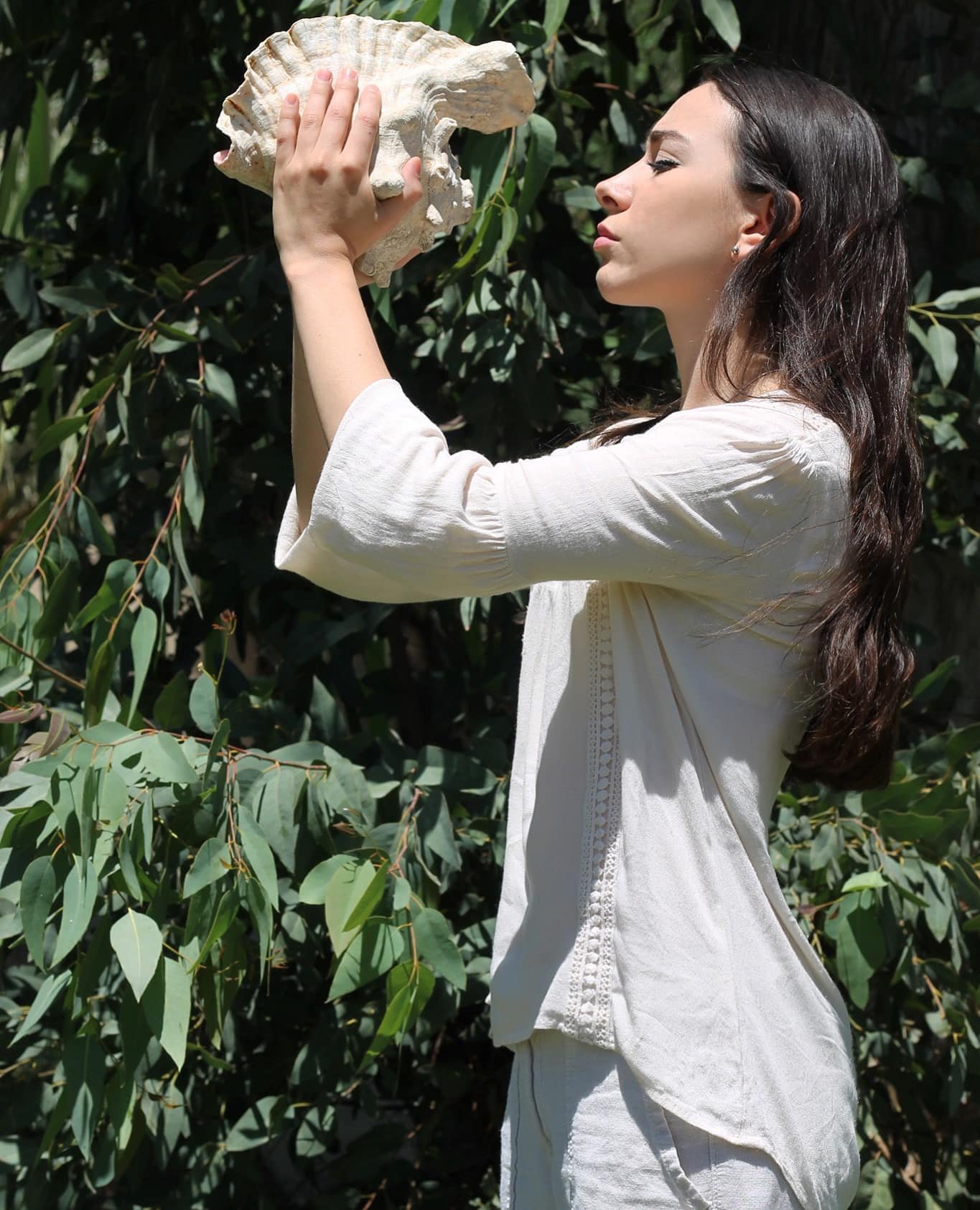
In her publications and conference presentations on prehispanic instruments, Maura Alemán has studied the tecciztli, a ritual aerophone crafted from marine shells, whose ceremonial use among the Mexica revealed a sacred relationship between sound, cosmos, and nature. These studies—published in Revista Thule (Italy) and by CENIDIM / INBAL (Mexico’s National Institute of Fine Arts)—approach sound as a living manifestation of symbolic thought, where listening served as a means of communication with natural and spiritual forces.
This research was later featured in the Ciclo de Encuentros Etnomusicológicos: Hablando de Instrumentos Musicales (Ethnomusicological Encounters: Discussing Musical Instruments), an international forum (Mexico–Brazil–Colombia–Haiti, 2020) where she engaged in dialogue with Latin American researchers on sonorities and ritual practices.
As part of her ethnomusicological trajectory, she was invited by the Centro Cultural Tijuana (CECUT) to deliver the lecture “Women in Ethnomusicology” as part of the series Women in the Arts.
Keywords: tecciztli, prehispanic instruments, Mexica music, sonic worldview, intangible heritage, Mexican ethnomusicology.
Sonic Memory and Haitian Migration
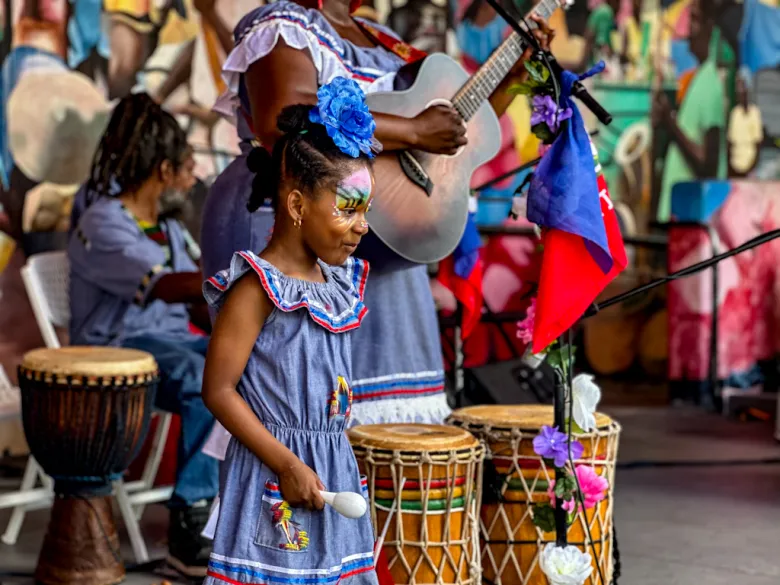
Maura Alemán’s research has expanded into contemporary contexts through her study of sonic memory and Haitian migration in Mexico. In presentations delivered at the II Congress of Ethnomusicology at UNAM (National Autonomous University of Mexico) and the Mexican Society of Anthropology, she analyzed how migratory territories generate new sonic geographies, where voice, song, and silence reconstruct identity and belonging.
This work was further developed in her publication in Revista RIO-LATIR (Network for the Anthropology of Art, CIESAS), where she examined the role of sound and performance as spaces of border and resistance.
Keywords: Haitian migration, sonic memory, contemporary ethnomusicology, cultural identity, Mexico–US border, sonic performance.
Acoustic Ecology in Baja California: Listening to the Borders
Escuchando los Bordes: Memoria, Territorio y Ecología Acústica en Baja California (Listening to the Borders: Memory, Territory, and Acoustic Ecology in Baja California) was the first project Maura Alemán presented on behalf of Rinforzando Música as an independent platform for sound research and sonic creation.
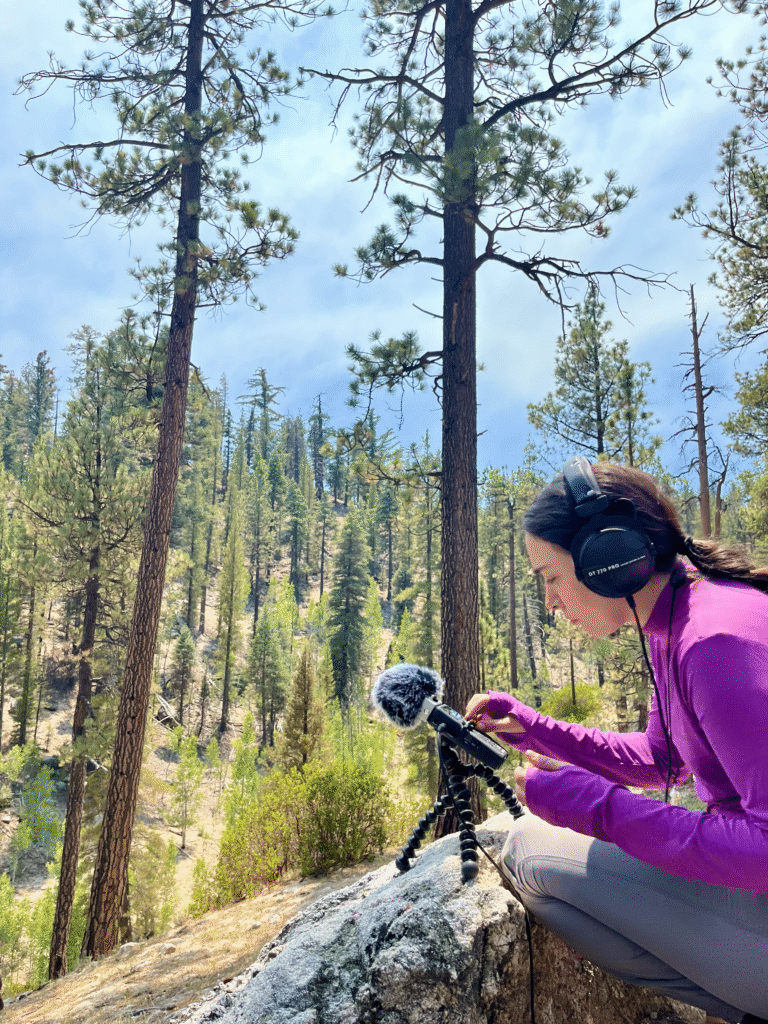
This research analyzes the soundscapes of Baja California through field recording and electroacoustic composition, proposing an ecological mode of listening that reveals the invisible memories embedded in the territory. The project approaches sound as living matter that connects landscape, body, and memory, integrating perspectives from sound art, acoustic ecology, and territorial thought.
The paper was presented at the Second International Colloquium on Soundscape: Public Space and Citizenship in Historic Centers, organized by leading academic institutions in Mexico, including Universidad Michoacana de San Nicolás de Hidalgo (UMSNH), Universidad Autónoma Metropolitana (UAM) Azcapotzalco, Benemérita Universidad Autónoma de Puebla (BUAP), and the National Council for Humanities, Sciences, and Technologies (CONAHCYT), in collaboration with the Ibero-American Network URBS SONORUM.
This presentation marked a turning point in her trajectory, consolidating Rinforzando Música not only as a music academy but also as a space for artistic research and independent knowledge production, connected to national and international academic networks.
Keywords: soundscape, acoustic ecology, sound art, Baja California, research-creation, Rinforzando Música.
Independent Music Pedagogy
A few days later, at the 9th International Congress on Building Environments for Teaching and Learning, organized by Universidad Autónoma de Baja California (UABC), she presented the paper Educar desde la independencia: una experiencia de transformación en la enseñanza del violín y la viola (Teaching from Independence: A Transformative Experience in Violin and Viola Education).
In this second presentation, she introduced the pedagogical model she has developed at Rinforzando Música, where autonomy, instrumental technique, and artistic research are integrated to rethink the role of the independent teacher as a creator of knowledge and an agent of educational change.
This paper complements the approach of Escuchando los Bordes by transposing the concepts of listening and freedom from the artistic realm to the pedagogical, demonstrating how independence can be both a way of teaching and a way of creating.
Keywords: independent music education, violin and viola pedagogy, educational innovation, arts education in Mexicali, Rinforzando Música.
Conference Papers and Academic Presentations
Sound Research & Sonic Practice – Maura Alemán
Maura Alemán has presented her research at national and international conferences and lectures, including UNAM (National Autonomous University of Mexico), CENIDIM (National Center for Music Research), UABC (Universidad Autónoma de Baja California), and the Ibero-American Network URBS SONORUM.
Listening to the Borders (2025)
| Presentation: | “Escuchando los Bordes: Memoria, Territorio y Ecología Acústica en Baja California” (Listening to the Borders: Memory, Territory, and Acoustic Ecology in Baja California) |
| Event: | Second International Colloquium on Soundscape: Public Space and Citizenship in Historic Centers |
| Organized by: | Universidad Michoacana de San Nicolás de Hidalgo (UMSNH), Universidad Autónoma Metropolitana (UAM) Azcapotzalco, Benemérita Universidad Autónoma de Puebla (BUAP), and the National Council for Humanities, Sciences, and Technologies (CONAHCYT), in collaboration with the Ibero-American Network URBS SONORUM |
| Venue: | Center for Information, Art, and Culture, Universidad Michoacana de San Nicolás de Hidalgo (UMSNH) |
| Keywords: | sound art, territory, acoustic ecology, research-creation |
Teaching from Independence (2025)
| Presentation: | “Educar desde la independencia: una experiencia de transformación en la enseñanza del violín y la viola” (Teaching from Independence: A Transformative Experience in Violin and Viola Education) |
| Event: | 9° Congreso Internacional de Educación y Transdisciplina 9th International Congress on Education and Transdisciplinarity: “Building Environments for Teaching and Learning in Human Development” |
| Organized by: | Universidad Autónoma de Baja California (UABC) |
| Venue: | Universidad Autónoma de Baja California (UABC), Faculty of Human Sciences, Mexicali, Baja California |
| Keywords: | music pedagogy, arts education, educational independence, teacher training, pedagogical innovation |
Sound, Gender, and Ethnomusicology (2021)
| Lecture: | “La mujer en la Etnomusicología” (Women in Ethnomusicology) |
| Series: | La mujer en las artes (Women in the Arts) |
| Organized by: | Secretaría de Cultura, a través del Centro Cultural Tijuana Ministry of Culture, through the Centro Cultural Tijuana (CECUT) |
| Venue: | Centro Cultural Tijuana (CECUT), Tijuana, Baja California. |
| Keywords: | ethnomusicology, gender, music research, women in music |
The Tecciztli and Ancestral Sonorities (2020–2021)
| Presentation: | “El tecciztli o trompeta de caracol y su uso recurrente en los rituales de sacrificio humano de las veintenas mexicas” (The Tecciztli or Conch Shell Trumpet and Its Recurrent Use in Human Sacrifice Rituals of the Mexica Veintenas) |
| Event: | National Forum on Music Research and Documentation |
| Organized by: | Centro Nacional de Investigación, Documentación e Información Musical (CENIDIM) / Instituto Nacional de Bellas Artes y Literatura (INBAL). |
| Venue: | Centro Nacional de Investigación, Documentación e Información Musical (CENIDIM) |
| Keywords: | musicology, sonic heritage, prehispanic cosmogony |
Ethnomusicological Encounters Series (2020)
| Presentation: | The Tecciztli |
| Event: | Ciclo de Encuentros Etnomusicológicos “Hablando de Instrumentos Musicales” (Ethnomusicological Encounters: Discussing Musical Instruments). Participation in the panel “Tecciztli – Drum – Atabaque – Electronic Percussion” |
| Organized by: | G.R.E.C.A Gruppo di Ricerca en Etnomusicologia Circolo Amerindiano (Italy) |
| Coordination: | María Lina Picconi. |
| Keywords: | ritual instruments, Afro-Latin American percussion, sonic heritage, comparative ethnomusicology |
Listening and Migration (2017–2018)
| Presentation 1: | El movimiento migratorio haitiano visto a través de su escucha” (Haitian Migration Through the Lens of Listening) |
| Event: | II Congress of Ethnomusicology: “Cuerpos sonoros: música, experiencia estética y praxis social” (Sounding Bodies: Music, Aesthetic Experience, and Social Praxis) |
| Organized by: | Universidad Nacional Autónoma de México (UNAM). |
| Venue: | Faculty of Music, UNAM |
| Temas: | migration, cultural identity, Haitian music in Mexico |
| Presentation 2: | “Del raboday al kompa: la música de los migrantes haitianos en Baja California” (From Raboday to Kompa: The Music of Haitian Migrants in Baja California) |
| Event: | Congress “Northern Mexico and the Southern United States: Fluid Spaces for Post-Global Processes” |
| Organized by: | Mexican Society of Anthropology |
| Venue: | Ensenada Baja California |
| Keywords: | migration, cultural identity, border musical practices |
Research Lines
Sound Research & Sonic Practice – Maura Alemán
Maura Alemán’s research trajectory is articulated through four interconnected axes:
- The ancestral: sound as cosmogonic and spiritual force
- The migratory: listening as memory in movement
- The territorial: soundscape as living archive of the environment
- The pedagogical: independence as creative and pedagogical act
Across all of them, listening serves as a common thread that transforms sound into a form of memory, resistance, and contemporary creation.
🇪🇸 Spanish version: To read about my research in Spanish, click here.